
- The hydrofoil crossing. A little over an hour from Niigata, and the rhythm changes as you step off the boat.
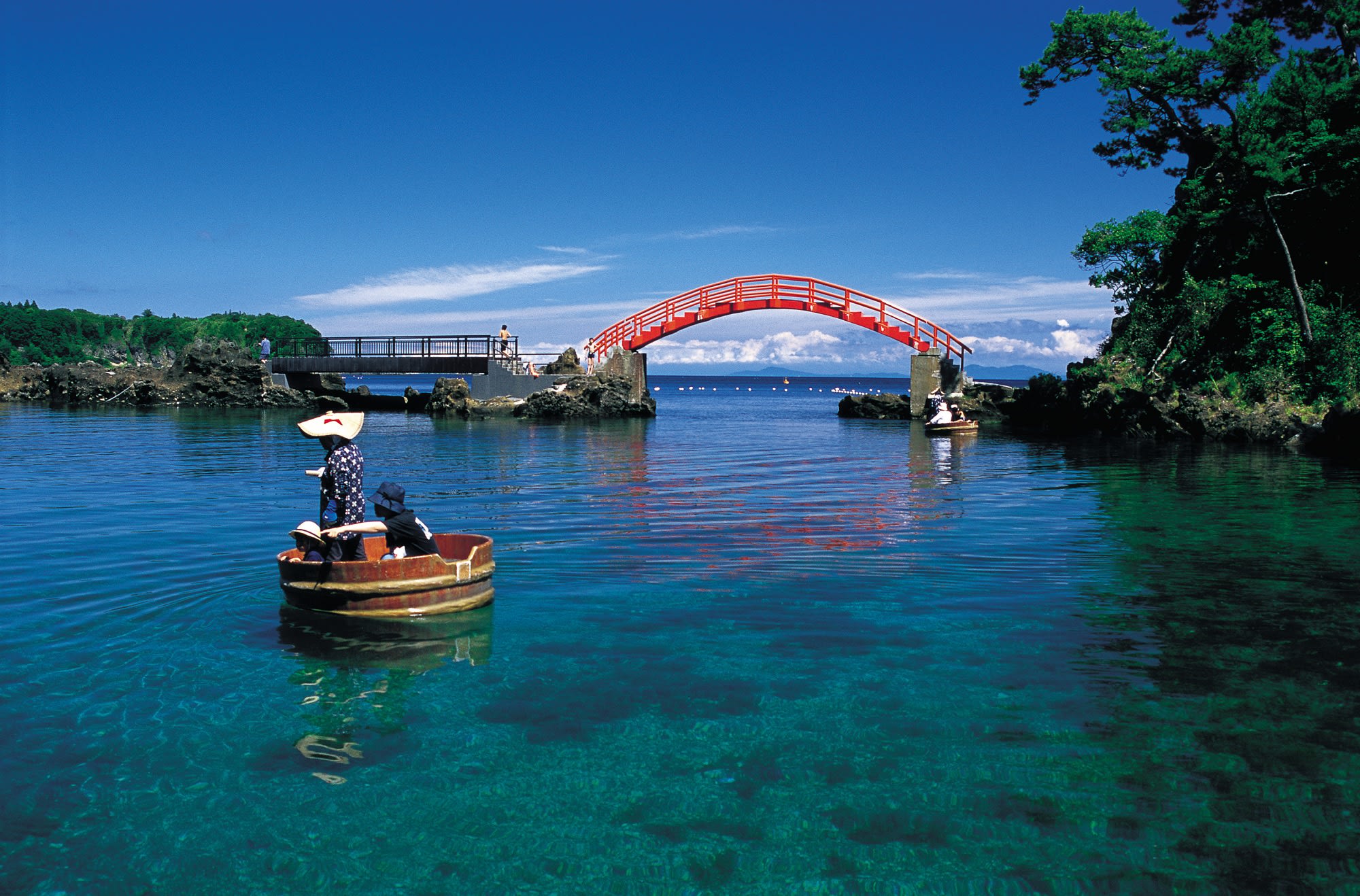
- The tarai-bune of Ogi. Tub boats, once used to fish between the rocks, today rowed by the women of the island.
- The taiko. An encounter with the art of the drum, on the island where the Kodo troupe was born.
- The Sado Kinzan gold mine. Worked for nearly four centuries, its galleries cut by hand into the mountain.
- A sake brewery. And, the same day, the five-storey pagoda of Myosenji temple.
- The okesa under the lanterns. In summer the island’s dance is taken up in a line down the street, the rush hat pulled over the face and the slow gestures handed down through generations.
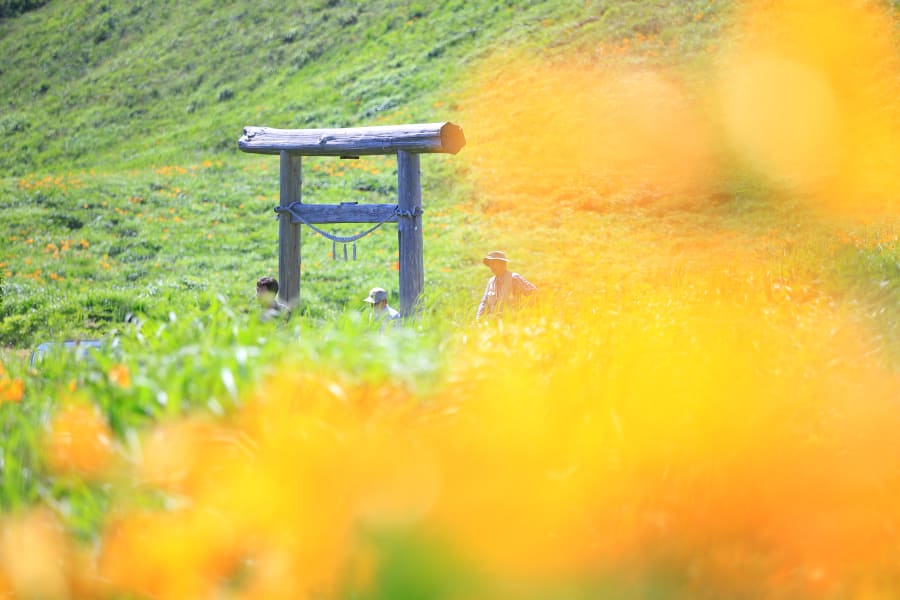
- A free morning, at the pace of the season. The day lilies of the north coast in late May, kayaking in clear water in summer, the coast road and its coves the rest of the time.
Itinerary
Day 1 — From Tokyo to Sado, Ogi
In the morning, the train leaves Tokyo station for Niigata, two hours. A short transfer leads to the port, then the hydrofoil runs out to Sado: a little over an hour of crossing. Northern Japan begins here, where the guide and the driver meet you.
After lunch in a local restaurant, the afternoon is spent at Ogi, on the south coast. This is where you step aboard a tarai-bune, those small tub boats once used for fishing among the rocks, today rowed by the women of the island.
In the evening, the night is spent in local lodging. In summer the street comes alive after dinner: the okesa, the island’s dance, is danced in a line under the lanterns, sedge hat pulled down over the face, the slow gestures handed down from one generation to the next.

Day 2 — The drum, the mine, the sake
The morning opens on taiko: an encounter with the art of the drum, on the island that saw the Kodo troupe born. Then the five-storey pagoda of Myosenji temple. In June the island’s temples disappear under hydrangeas, Rengebu-ji above all, where you walk between two walls of flowers when it rains.

After lunch, the afternoon leads to a sake brewery, then to the Sado Kinzan gold mine, worked for close to four centuries, its galleries dug by hand into the mountain.
The night is spent again in local lodging.
Day 3 — The return
The morning stays free, at the rhythm of the island, and what it is worth depends on the season. In late May and early June the day lilies cover the meadows of the north coast right to the cliff edge, an old wooden torii standing in the middle of them. In summer the sea turns clear enough to take by kayak, in among the rocks, and the sunflowers hold the high ground above the lighthouse. The rest of the year there is the coast road, the hamlets and the coves, with no programme.


After a last lunch in a local restaurant, the hydrofoil takes you back to Niigata, then the train reaches Tokyo, two hours. The night is spent there, according to what follows in the trip.
Our addresses
The two nights are spent in local lodging, on the island: simple inns, as close as it gets to the life of Sado. The addresses are settled with you.
Travel times
Everything goes through Niigata: the island lies some sixty kilometres offshore, in the Sea of Japan, and the city’s port is the only way in from Honshū. From Tokyo, allow three and a half hours door to door, crossing included.
| Journey | Time |
|---|---|
| Tokyo → Niigata, Jōetsu shinkansen | 2h |
| Niigata station → port, taxi | 15 min |
| Niigata → Ryōtsu, hydrofoil | 1h05 |
| Niigata → Ryōtsu, car ferry | 2h30 |
| Tsuruoka → Niigata, Inaho express | 2h |
The car ferry is slower but handles a rough sea better: we switch to it when the weather calls for it. Coming from Tsuruoka, the side trip follows on naturally from Dewa Sanzan, working down the coast.
Good to know
- Three days accompanied by a guide and a driver, from the first moment on the island to the last.
- Depending on the time available, the tarai-bune outing may take place in the afternoon.
- It combines naturally with Dewa Sanzan, before it: its sacred mountains and a night at the temple ahead of the crossing. The island is then reached from Tsuruoka, via Niigata and the hydrofoil.