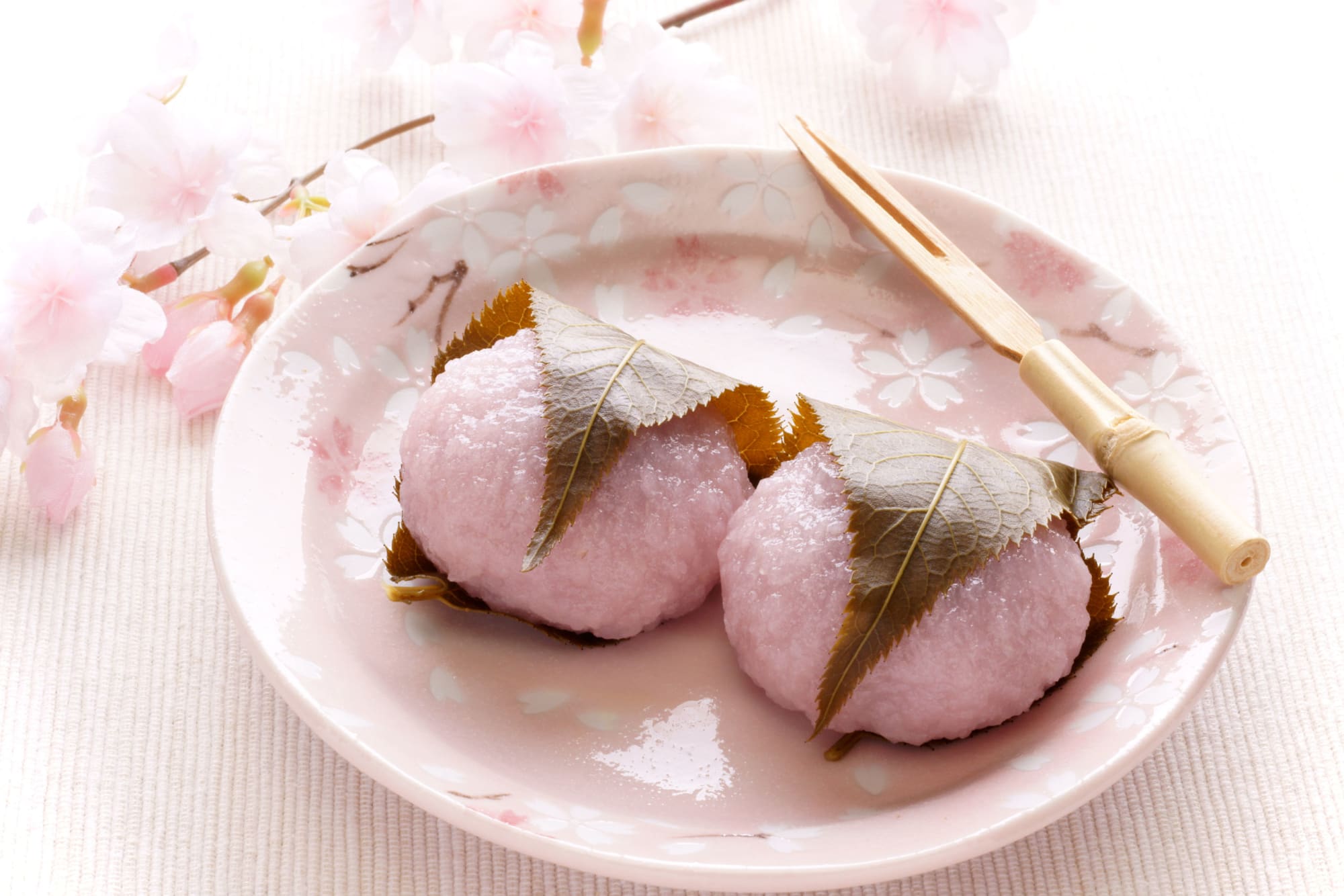
Wagashi: 和菓子 (和 wa = Japan; 菓子 kashi/gashi = confectionery) are, as the name says, traditional Japanese sweets.
Japanese pastry chefs today are among the best in the world and Western cakes are much loved, but wagashi remain popular and you will have no trouble finding shops that sell them.
Traditionally they are eaten during the tea ceremony, with matcha. The bitterness of the matcha balances how sweet they are, and the two together are the point.
There are many kinds of wagashi. We have chosen the five most popular.
Daifuku
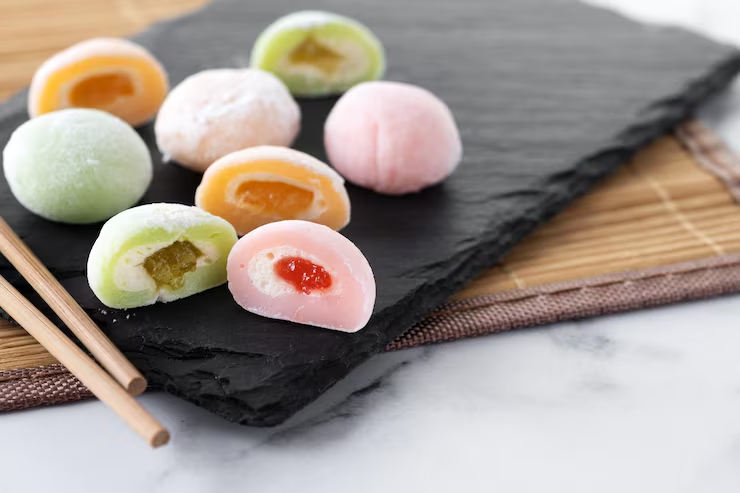
Daifuku are traditional Japanese sweets made with mochi, a preparation based on glutinous rice. The mochi is filled with various ingredients, very often red bean paste.
There are many versions, but if you come to Japan in spring, start with ichigo daifuku, which hold sweetened red bean paste and a strawberry (see the photograph below). They are available from February to June.
Daifuku first became popular under the name habotai mochi, thick-bellied rice cake. The name then shifted to daifuku mochi, big-bellied rice cake. Since “belly” and “luck” are pronounced the same way in Japanese, the name changed again, to “the mochi of great luck”.
Because of that name, Japanese people consider eating daifuku lucky, and they are commonly eaten at New Year to secure good fortune for the year ahead.
A daifuku costs between 250 and 500 yen: 2 to 4 euros.
You will find them across Japan, and particularly in the places that have kept something traditional about them, such as the Asakusa district in Tokyo.
Taiyaki
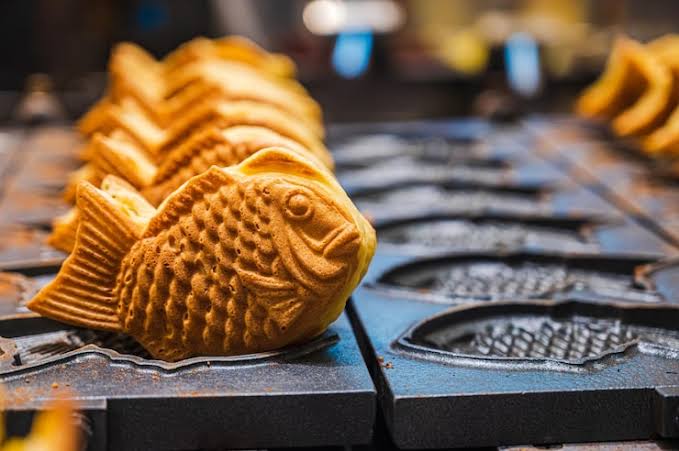
Taiyaki is a wafer shaped like a tai, the red sea bream. It was originally filled with red bean paste.
Other versions are now sold as well, the most common being sweet potato or custard.
History
Taiyaki was created during the Meiji period (1868 – 1912). It derives from imagawayaki, a sweet that tastes the same but is cylindrical in shape.
Why they came to be shaped like a tai has been lost. Some say the fish was rare and expensive at the time. Others think it is because it is considered lucky.
A taiyaki costs around 350 yen.
In Tokyo we recommend a chain that specialises in them: Naruto Taiyaki Honpo, with shops in several districts of the city.
Dorayaki
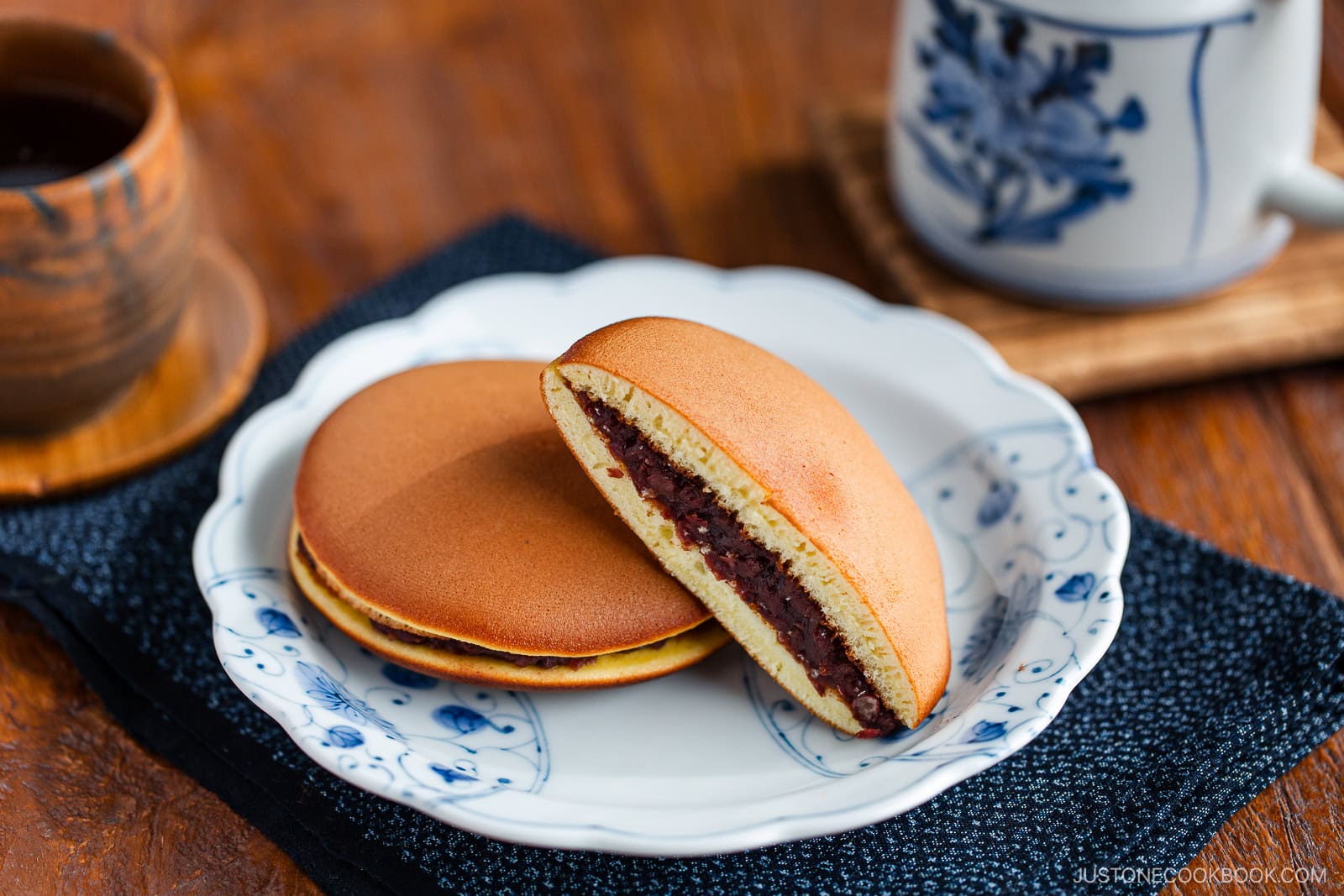
The shape of a dorayaki suggests a cake made of two pancakes with a filling, but the taste is closer to sponge cake. The filling is traditionally anko, red bean paste. You do occasionally find alternatives, whipped cream and fruit for instance, though these are rarer.
The origins of the dorayaki are disputed. The most popular story has a warrior monk leaving his gong (dora) behind at a farmer’s house. The farmer used it to cook a cake, which is how the round shape came about. Hence the dorayaki.
It was then heavily popularised among children in the 1980s by Doraemon, a cartoon character who cannot get enough of them.
A dorayaki costs on average 350 yen. You will find them in many places: in konbini, in traditional Japanese tea rooms, or in shops that specialise in wagashi.
Momiji Manju
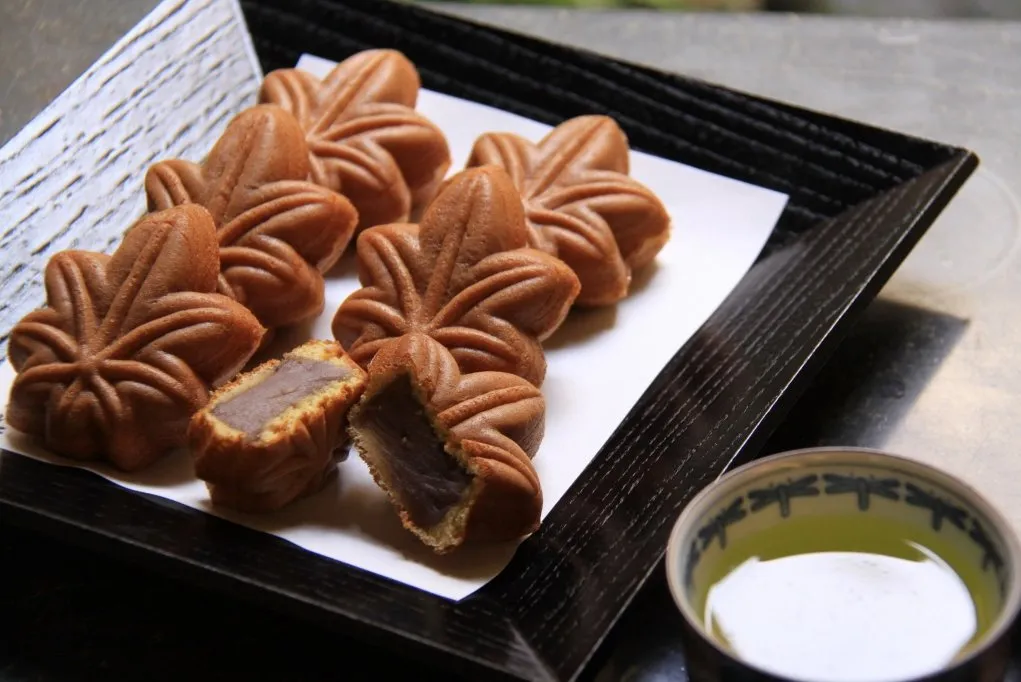
Momiji manju are a variety of manju: sweets whose dough is traditionally made from flour, rice powder, kudzu and buckwheat, filled with anko, a mixture of boiled azuki beans and sugar.
What makes the momiji manju distinctive is its shape: a momiji, an autumn maple leaf.
The momiji manju was created during the Meiji era, in the early 1900s. The pastry maker who invented it supplied wagashi to a ryokan on the island of Miyajima. The inn was known for its view over the maple valley and wanted a sweet of its own. At the owners’ request, the pastry maker developed a new wagashi: the momiji manju, which spread quickly and became the emblem of the Hiroshima region.
To taste momiji manju you have to go to the city where they were made: Miyajima, or its neighbour Hiroshima.
Planning your trip to Japan and still unsure whether to go as far as Hiroshima and Miyajima? Here are the five reasons you will like Hiroshima to help you decide.
PS: if you have not planned to travel to Hiroshima (a shame), you can still taste “classic” manju in other Japanese cities: the shape will differ but the taste is the same.
Dango
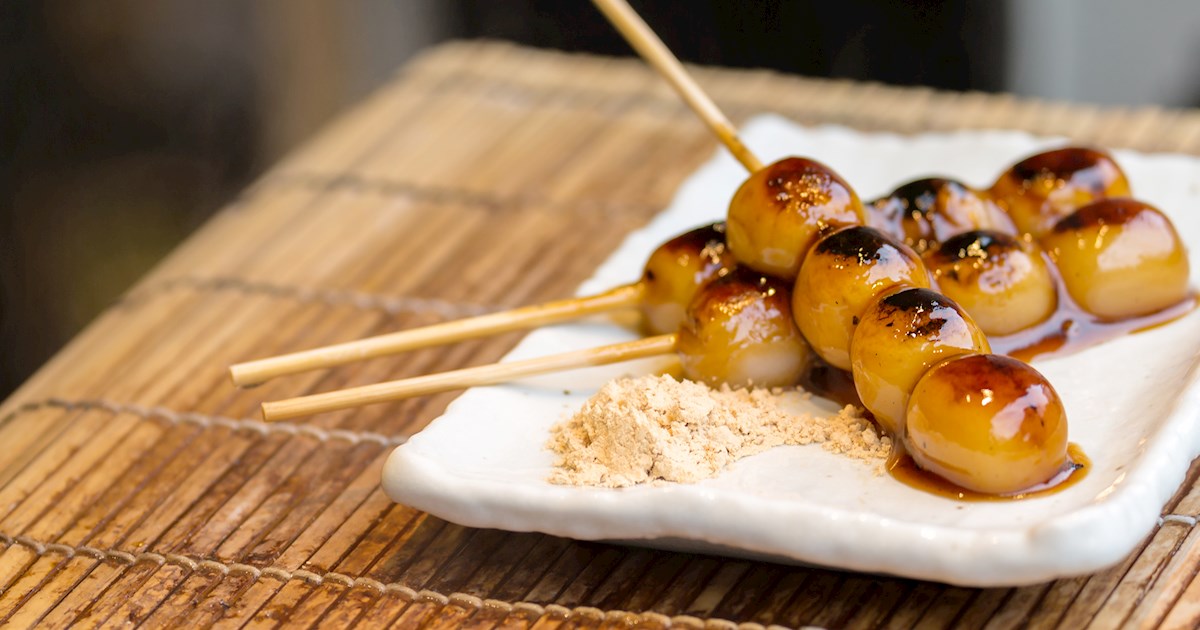
Dango are skewers of dumplings made from ordinary rice flour mixed with glutinous rice flour. Unlike mochi, they are not steamed but cooked in hot water.
They can be plain, or flavoured — sakura or mugwort, for the coloured ones. You will also find them with different sauces, or grilled over a fire before you eat them.
Dango are thought to have appeared in the 13th or 14th century and originally served as offerings to the gods. They were then made of 5 dumplings, each standing for a part of the human body.
Dango now more often come in 3 or 4 dumplings, though you sometimes still find them with 5.
You can buy dango in any supermarket, in konbini, or in shops that specialise in Japanese sweets. With some luck you may find them grilled at a festival or at a small stall on a side street.
Our favourite wagashi shops
To close, a few suggestions of places to go and eat wagashi:
Kyoto
- Gion Tsujiri: a very popular shop in Kyoto
- Toraya Confectionery: another reference point for wagashi, established in the early 16th century.
Tokyo
- Funawa: the house has several shops in Tokyo, including one in Asakusa that has been there since the early 1900s.
- Naruto Taiyaki Honpo: mentioned above, Naruto Taiyaki Honpo is our favourite chain for taiyaki in Tokyo.