
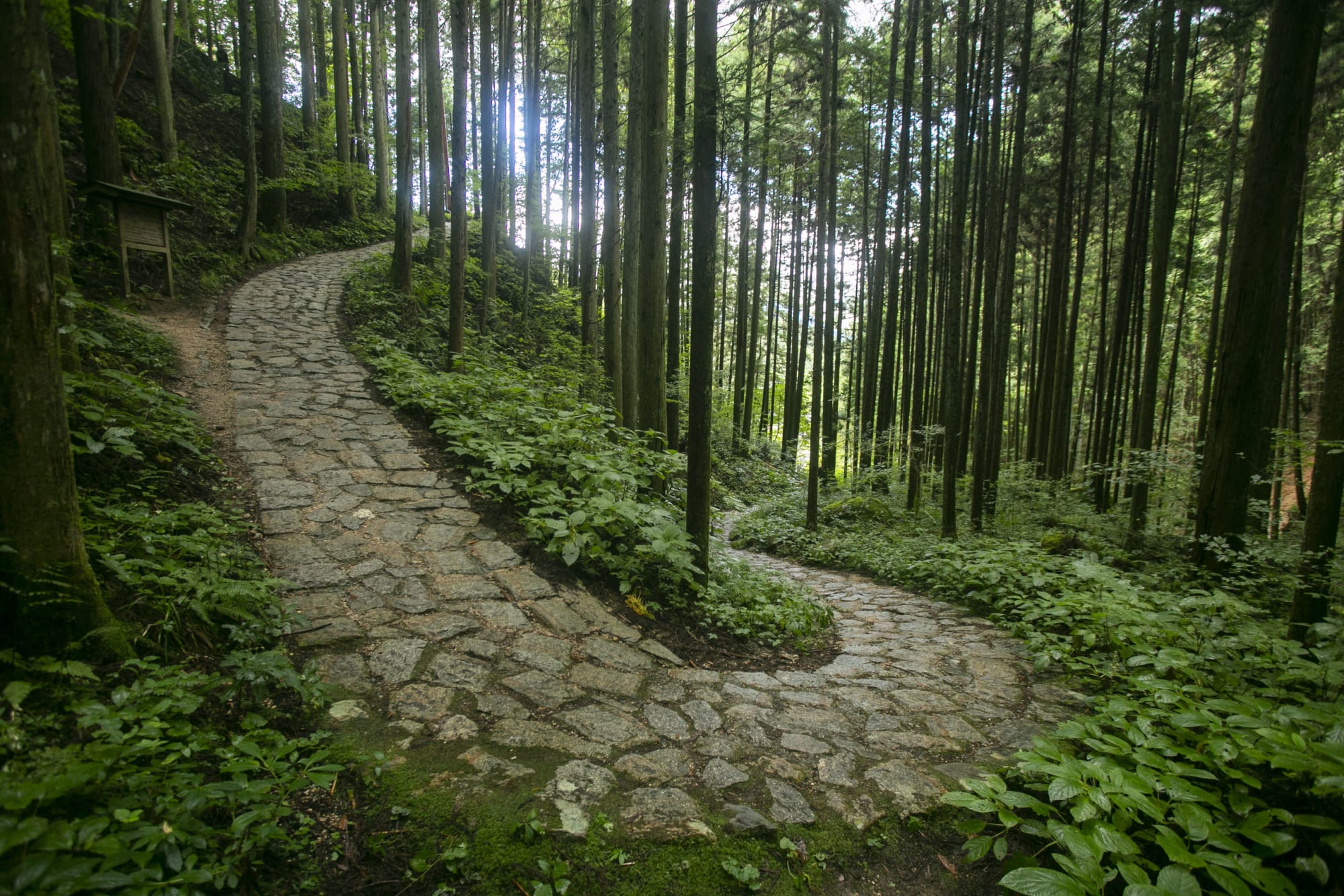
- The Ishidatami. An original paved path, polished by the centuries, deep in the forest. This is where the road takes its true measure.
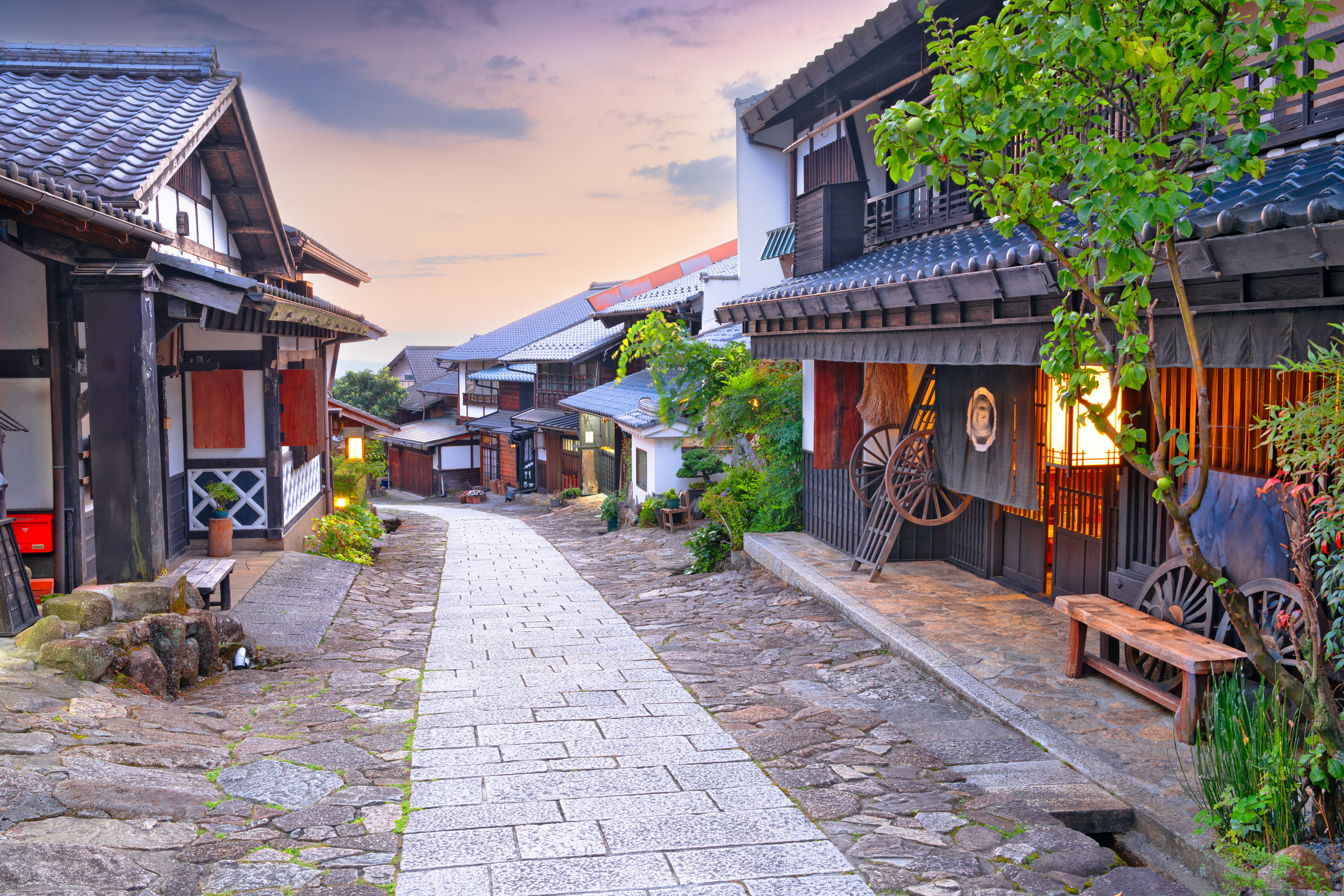
- Magome. A former post town carefully restored, its timber houses lined along a sloping paved street.
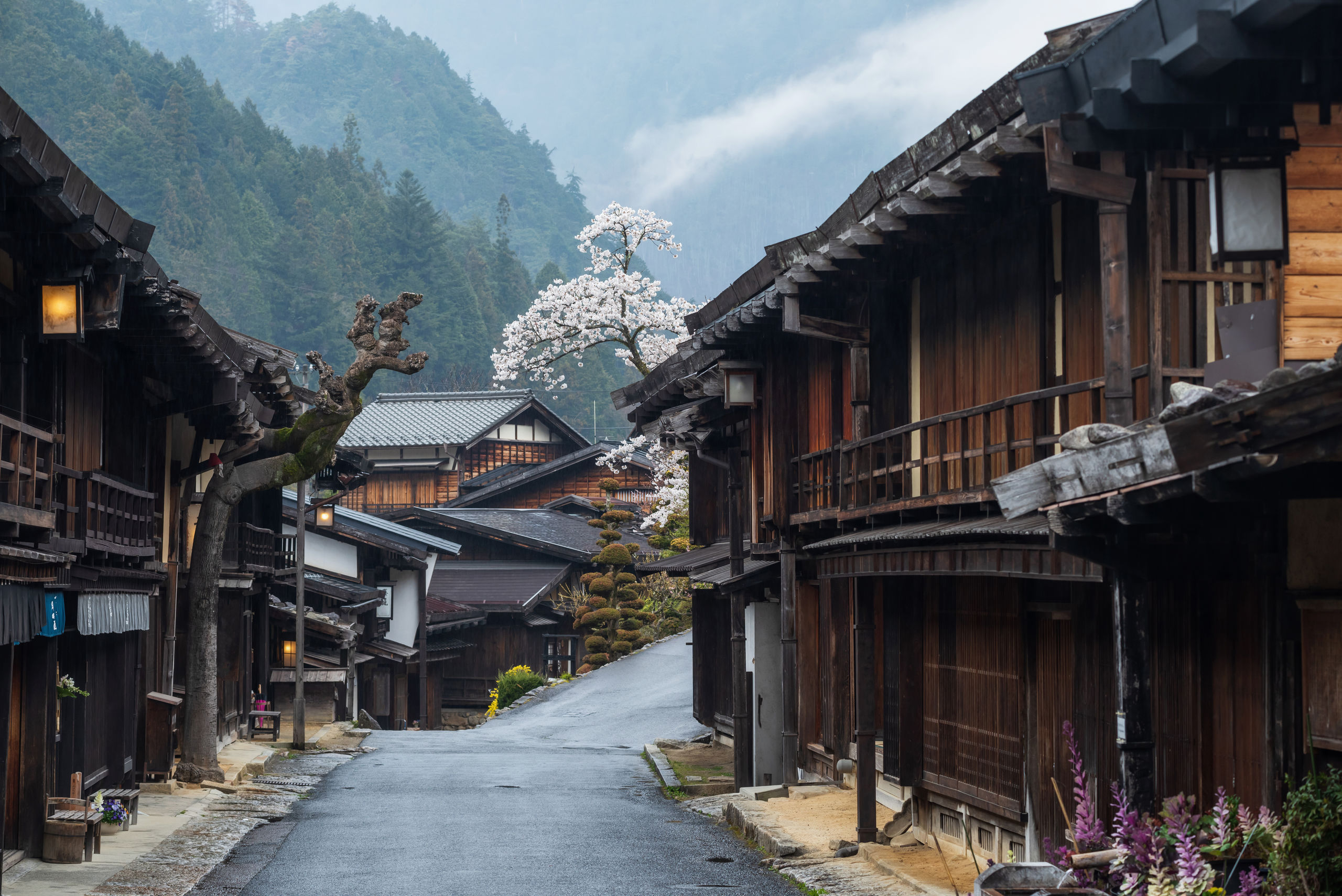
- Tsumago. One of the best preserved villages on the road, more intact still than Magome.
- The tea house at the pass. A tea offered to walkers, a simple halt, in the spirit of the road.
- Two walks of about eight kilometres. Three to four hours each, moderate climb, replaceable by a transfer if the weather turns.
- A night in a minshuku. Tatami, futon, dinner and breakfast made in the house and served at a set hour, in the quiet of the evening.
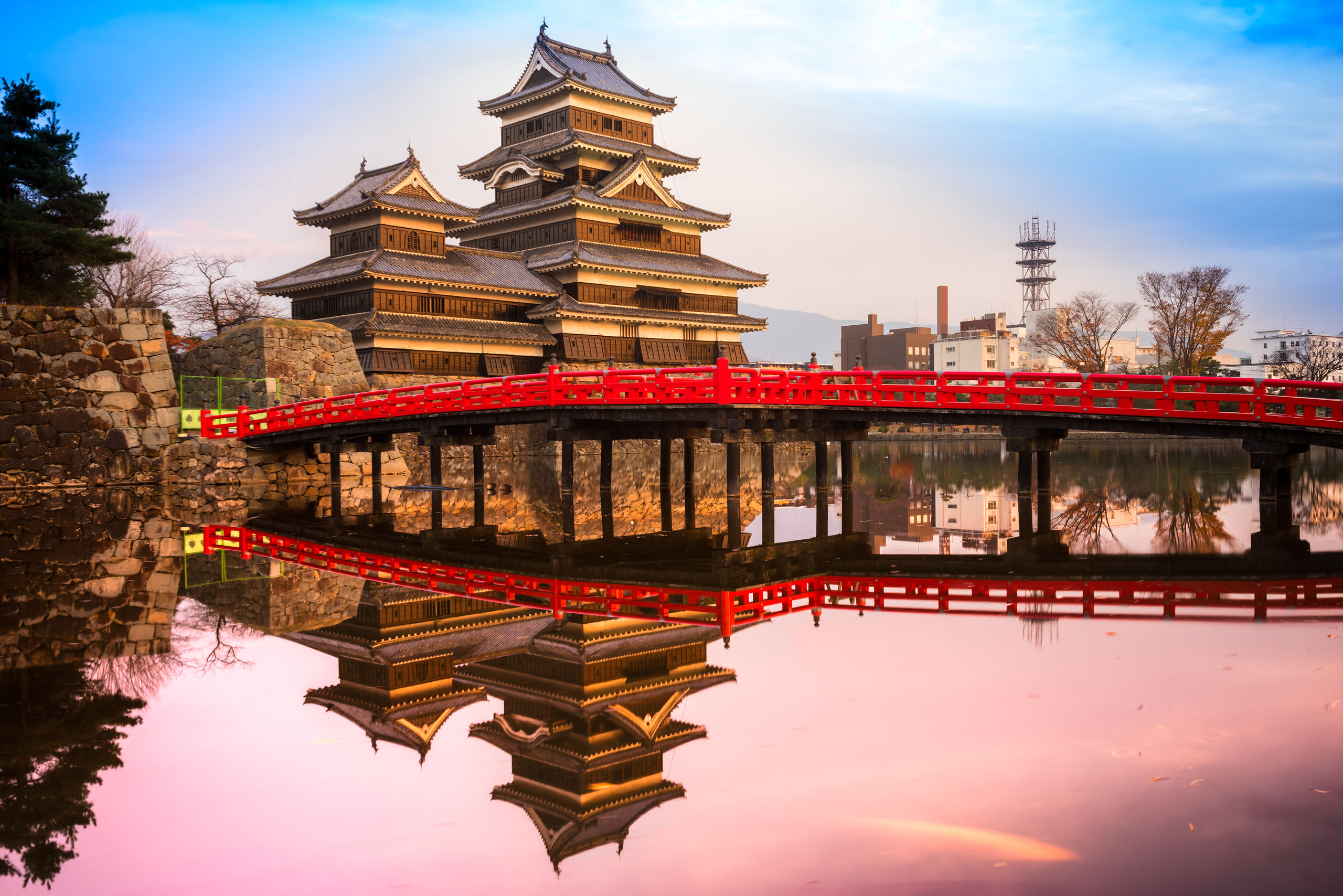
- The black castle of Matsumoto. Lit at nightfall, at the end of the walk.
Itinerary
Day 1 — Toward Magome
In the morning, the train leaves Hakone for the Kiso valley: around three and a half hours, one change at Nagoya. At Nakatsugawa, the walking begins.
The Nakasendo once linked Edo to Kyoto through the mountains. Unlike the Tokaido, its sister road, it has kept sections intact. The path starts out between farmland and the edge of town, then tips into the forest. That is where it takes its true measure, above all on the Ishidatami, an original paved way, polished by the centuries.
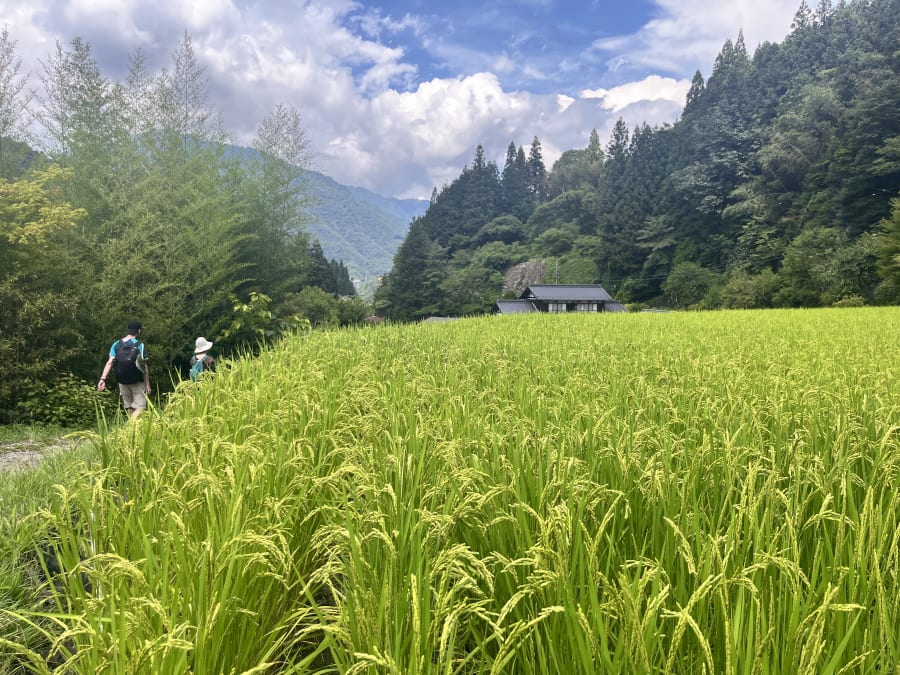
Allow eight kilometres, three to four hours of walking.

The day ends at Magome. A former post town restored with care, it lines up its wooden houses along a sloping paved street: the atmosphere of Edo, all but intact. You arrive on foot, straight to your lodging.
The night is spent in a minshuku: tatami, futon, dinner and breakfast made in the house. A Japanese table served at a fixed hour, in the calm of the evening.
Day 2 — From Magome to Matsumoto
The morning begins without haste, time enough to pace out Magome and its views over the valley.
Then the path picks up again, as far as Tsumago: a little under eight kilometres, three hours of walking through forest and small hamlets. The climb to the Magome pass, then the descent in the shade of the trees. Along the way, a tea house welcomes walkers with a tea offered freely, a simple halt, in the spirit of the road. Further on, the Medaki and Odaki waterfalls, where the samurai once came to train and to gather themselves.

Tsumago is one of the best preserved villages on the Nakasendo, more preserved still than Magome. You wander it freely, stopping in a café or in an old inn.
From there, a bus, or the walk for those with the legs for it, leads to Nagiso station, then the train runs on to Matsumoto, around an hour. The setting changes: after the forest, the city. Matsumoto stands around its black castle, which is lit as the day falls. The lodging, this time, is a hotel close to the station, for a more restful night, after two days of walking.
Our addresses
In Magome, traditional houses
You sleep here in family-run minshuku and ryokan: tatami rooms, futon, bathrooms sometimes shared, and a home-cooked dinner that often counts among the finest moments of the evening.
- Shinchaya. At the entrance to the village, a particularly careful table.
- Manpuku-An Eishoji. A little set back, quiet, a contemplative atmosphere.
- Magome Shirokiya. In the heart of the main street, as close as it gets to the life of the village.
- Tajimaya. A family minshuku, a warm welcome and home cooking.
In Matsumoto, hotels
The comfort shifts register: modern hotels, well placed, often a few minutes from the station.
- Tabino Hotel Lit Matsumoto. Recent, neat, close to the station.
- Hotel Buena Vista. Spacious rooms, a fuller standard of service.
- Matsumoto Marunouchi Hotel. A step from the castle.
- Onyado Nono Matsumoto (Natural Hot Spring Azumi No Yu). A modern ryokan, with an onsen to ease the legs.
Travel times
The Kiso valley sits halfway between Tokyo and Kyoto: which is exactly why the road went through it. The side trip works in either direction: you come in at Nakatsugawa, in the south, and leave by Matsumoto, in the north.
| Journey | Time |
|---|---|
| Tokyo → Nakatsugawa, shinkansen then Chūō line | 2h45 |
| Kyoto → Nakatsugawa, via Nagoya | 1h45 |
| Osaka → Nakatsugawa, via Nagoya | 2h15 |
| Nakatsugawa station → Magome, bus | 25 min |
| Tsumago → Nagiso station, bus | 10 min |
| Matsumoto → Tokyo, Azusa express | 2h40 |
| Matsumoto → Takayama, mountain road | 2h30 |
Coming in always goes through Nagoya, with a change onto the Chūō line. Leaving, Matsumoto is joined directly to Tokyo, or carries on to Takayama and the Japanese Alps, which extend the walking into the mountains.
Good to know
- Two active days, two walking sections of around eight kilometres each, moderate height gain.
- In a minshuku, arrival is early (5pm – 6pm): meals are served at a fixed hour.
- Each walk can be shortened or replaced by a transfer, according to the weather and the mood: a taxi reaches the edge of the forest on the first day, a bus links Magome to Tsumago on the second.