

- A guide from end to end. From the first moment on the ground to the last, across both days.
- The tea tasting. The day opens on it, straight off the train.
- The town by bicycle. Nothing here is more than twenty minutes away, and the afternoon goes street by street.
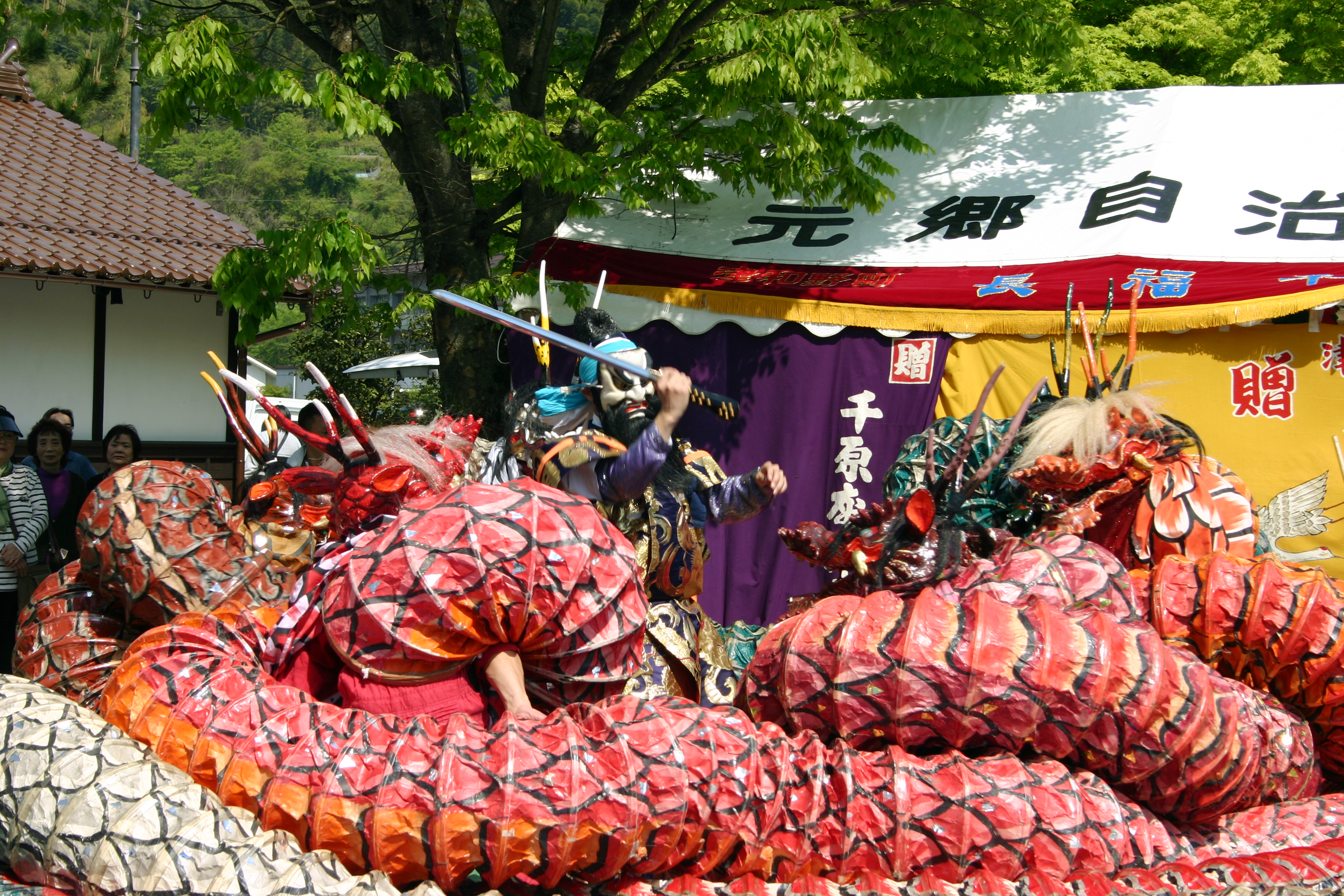
- The kagura. The danced theatre of Iwami. The great serpent takes up the whole stage, a dancer inside each coil.
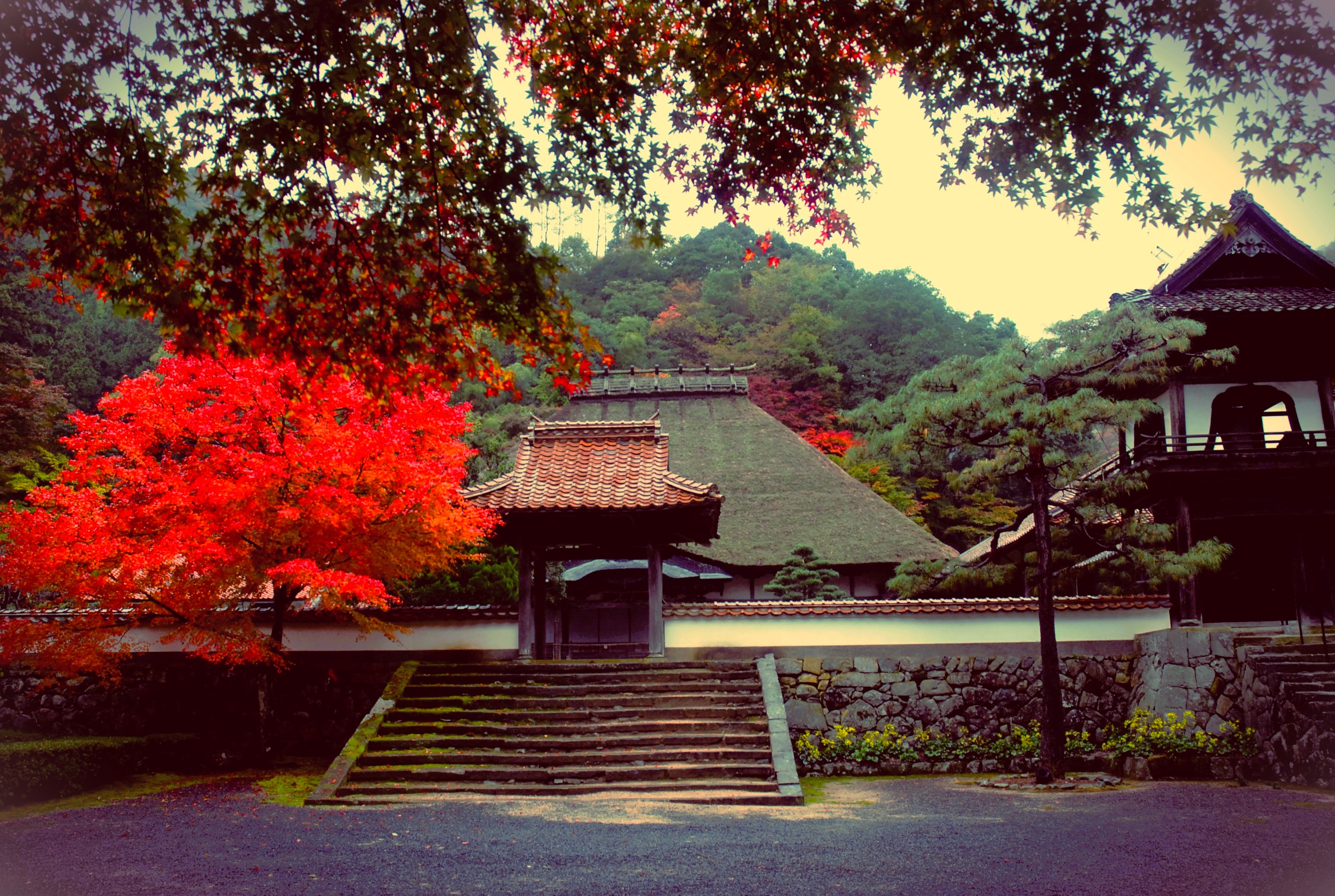
- Yōmei-ji. The town’s zen temple, whose great hall has kept its thatch.
- The castle ramparts. Above the valley and its rice fields, with the steam train passing below.
- A night at the inn. Four to eight rooms, often the owner doing the cooking, and almost always under ten minutes’ walk from the station.
Itinerary
Day 1 — The arrival, the town by bicycle
In the morning, the train leaves Hiroshima for Tsuwano, two and a half hours. At the station, the guide meets you, and the day opens gently, around a tea tasting.
After lunch in a local restaurant, the afternoon is discovered by bicycle, along the streets, before a performance of kagura, a traditional danced theatre.
When evening comes, it is time for the inn: a night in a ryokan or minshuku, dinner included, in the calm of the small town.
Day 2 — The town, then the road
After breakfast at the inn, the morning is spent getting to know Tsuwano more closely, on a guided walk. Then lunch, again in a local restaurant.
In the afternoon, you part from the guide at Tsuwano station, and the train heads on to Shin-Osaka or Kyoto, around four hours. The night is spent there, according to what follows in the trip.
Our addresses
The night is spent in a traditional inn, ryokan or minshuku, dinner and breakfast included. The houses are small: four to eight rooms for most of them, often the owner in the kitchen, and nearly all of them under ten minutes on foot from the station. A few addresses, to give you the tone:
- Noren Yado Meigetsu. A ryokan of eight rooms, tatami and shōji paper doors, a kaiseki table drawn from what grows here.
- Yutorelo Tsuwano. The only house in town with a hot spring; some rooms have a sauna or an open-air bath.
- Wakasagi-no-yado. Facing the castle and the Taikodani Inari shrine. From the room you watch the steam train pass; the fish comes from the port of Hamada.
- Haradaya. Four rooms at the end of a discreet lane. You hear water running from the rooms.
Other arrangements exist, depending on what you feel like: an inn with a French table up on the heights, a guest house kept by a seasoned traveller, two rooms above a tea shop. The address is settled with you.
Travel times
Tsuwano is inland, at the far end of a valley in western Chūgoku. You come from Hiroshima: it is the only approach that fits inside half a day, and it goes through Shin-Yamaguchi, where you leave the shinkansen for the valley line.
| Journey | Time |
|---|---|
| Hiroshima → Shin-Yamaguchi, shinkansen | 30 min |
| Shin-Yamaguchi → Tsuwano, Yamaguchi line | 1h30 |
| Tsuwano → Shin-Osaka or Kyoto, the same way back | 4h |
That is around two and a half hours from Hiroshima, with one change. The guide meets you at the station, and the town itself is done on foot or by bicycle: nothing is more than twenty minutes away. The side trip combines naturally with Hiroshima & Miyajima, which is on the road in both directions.
Good to know
- Two days accompanied by a guide, from the first moment on the ground to the last.