
- A night in a shukubo. Tatami and futon, the rhythm of the house rather than your own.
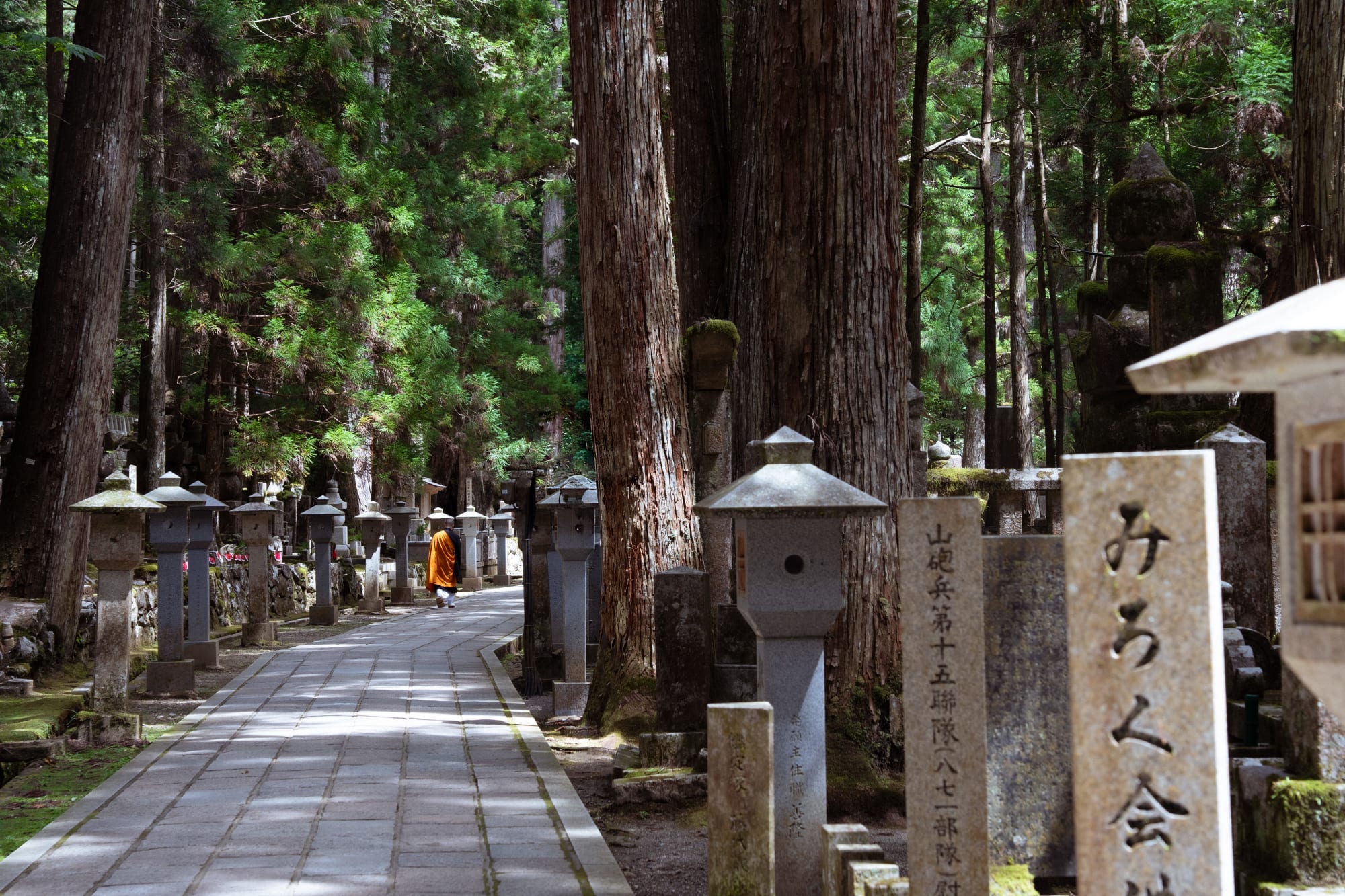
- Okunoin. 200,000 graves under century-old cedars, moss on the stone, and monks still moving between the tombs.
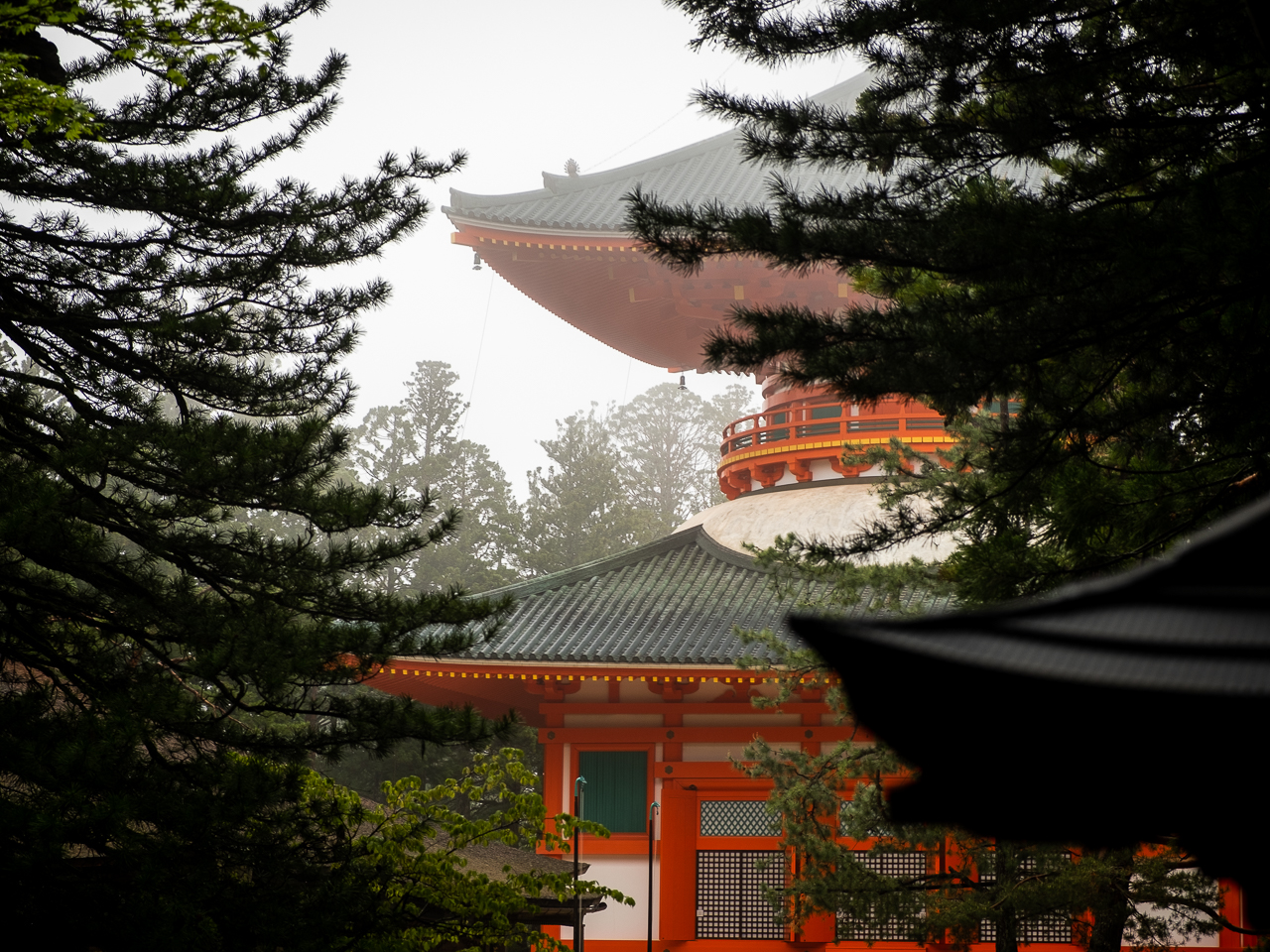
- The Konpon Daitō pagoda. Scarlet red in the middle of the Danjo Garan. Mist rises in the afternoon: you sense the buildings before you see them.
- The Banryū Tei. The largest dry garden in Japan, gravel raked into waves around two stone dragons.
- The shōjin ryōri. Seasonal vegetables, tofu, seaweed, rice, served before 6pm. The day sets itself by that hour.
- The morning ceremony. The recitation of the sūtras, before breakfast.
- The goma. In the monasteries that hold it, the fire ritual comes in the afternoon.
- The silence after nine. No bar, no television, the dry cold of the mountain.
This leg begins from Osaka, north of the Wakayama mountains.
Itinerary
Day 1 — The climb, the temples
Kōyasan has to be earned. From Namba, the Nankai line climbs the gorges for an hour and twenty minutes, then a funicular, one of the steepest in Japan, finishes the ascent. You arrive into colder air, a smell of incense, a silence that changes everything.
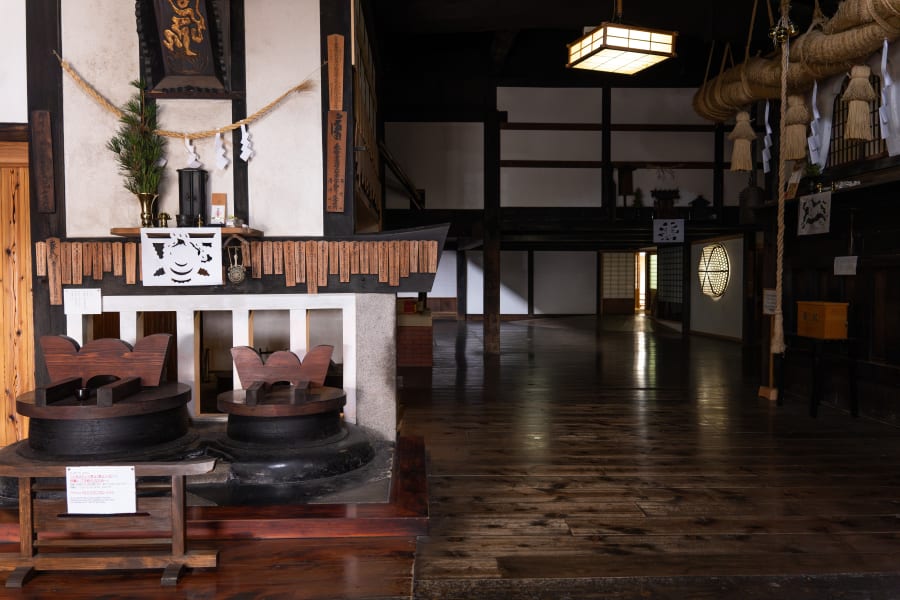
At the monastery, the welcome dispenses with ceremony: a monk, a tatami room, three times. You dine at five, because that is how it is.
The fire ritual, the goma, is held in the afternoon, in the monasteries that hold it: the time is given to you on arrival, and the rest of the day falls in behind it.

Then Okunoin, where Kōbō Daishi rests, the monk who founded Kōyasan twelve centuries ago. More than 200,000 graves under centuries-old cedars, moss over the stone, and monks still moving among the tombs, in a silence broken only by the trees.
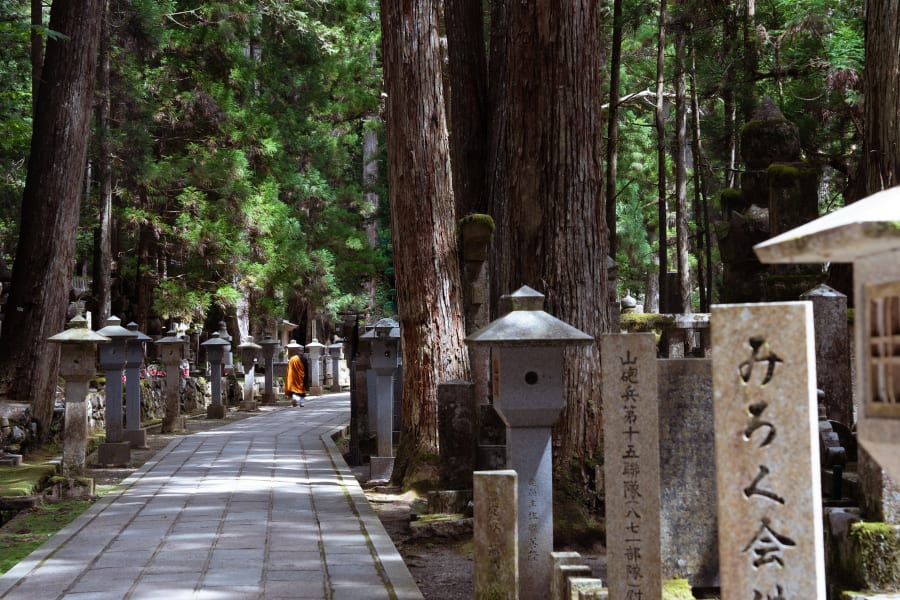

Evening falls early. The air changes, more mysterious: the lanterns glimmer, the trees carry their shadow, and you understand why Kōyasan is one of the most sacred places in Japan.

For dinner, you are introduced to the vegetarian cooking of the Buddhist monasteries, shōjin ryōri: seasonal vegetables, tofu, rice, seaweed. Then comes the hour of the bath, taken communally, in the Japanese way: you wash before getting into the water. After nine, the monastery returns to its silence: no bar, no television, only the dry cold of the mountain and, in winter, snow gathering on the roofs.
Day 2 — The morning ceremony
At first light, the monks celebrate the morning ceremony: the recitation of the sūtras. The exact time is given to you on arrival, usually between 6 and 7am. Breakfast comes next, vegetarian like the dinner the night before, and then check-out.
The rest of the day belongs to the Danjo Garan, where the Konpon Daitō pagoda, scarlet red, breaks the line of the cedars. Mist often rises in the afternoon: you sense the buildings before you see them. A few steps away, the dry garden of Kongōbuji: gravel raked into waves around two stone dragons.
Kōyasan is not a destination in itself: it is the leg that sets the rhythm for the rest of the journey.
Our addresses

The night is spent in a shukubo, temple lodging: tatami and futon, vegetarian meals, the rhythm of the house rather than the traveller’s. Bathrooms are often shared, the partitions thin, and winter is felt through the walls: that is the price of a night in a working monastery. A few addresses, to set the tone:
- Shojoshin-In. On the edge of Okunoin, the most complete of the four.
- Souji-In. Well placed, a collected atmosphere.
- Kōyasan Saizen-In. Simpler, the same rhythm.
- Saimon-In. The plainest of the four, and the frankest immersion in monastic life.
A hundred or so temples share the mountain, some fifty of which receive travellers. The address is settled with you.
Travel times
Kōyasan is reached from Kansai and from nowhere else: the mountain sits south of Osaka, at the terminus of a private line.
| Journey | Time |
|---|---|
| Osaka ↔ Kōyasan | about 2h |
| Kyoto ↔ Kōyasan | about 3h |
Door to door: from Osaka (Namba), the Nankai Kōya line to Gokurakubashi, the funicular, then the bus to the centre of the plateau. From Kyoto there is no direct service: the change, at Namba or Hashimoto, is part of the journey. On the plateau everything is done on foot or by local bus.
What comes next. Leaving, many carry straight on to the Kumano Kodō: four hours by the direct bus, which runs only from April to November, and three and a half hours by train the rest of the year, via Hashimoto and Wakayama. That is the pilgrims’ route, and it is worth the day it costs.
Good to know
- The monastery day begins and ends early: dinner is served between 5 and 6pm, the morning ceremony falls between 6 and 7am. Meals are vegetarian, dinner through breakfast.
- The plateau sits at 800 metres: colder than Osaka in every season, with snow holding from December to March.
- At Okunoin, modest dress has been expected since spring 2026: shoulders and back covered, a light jacket or a shawl will do.