
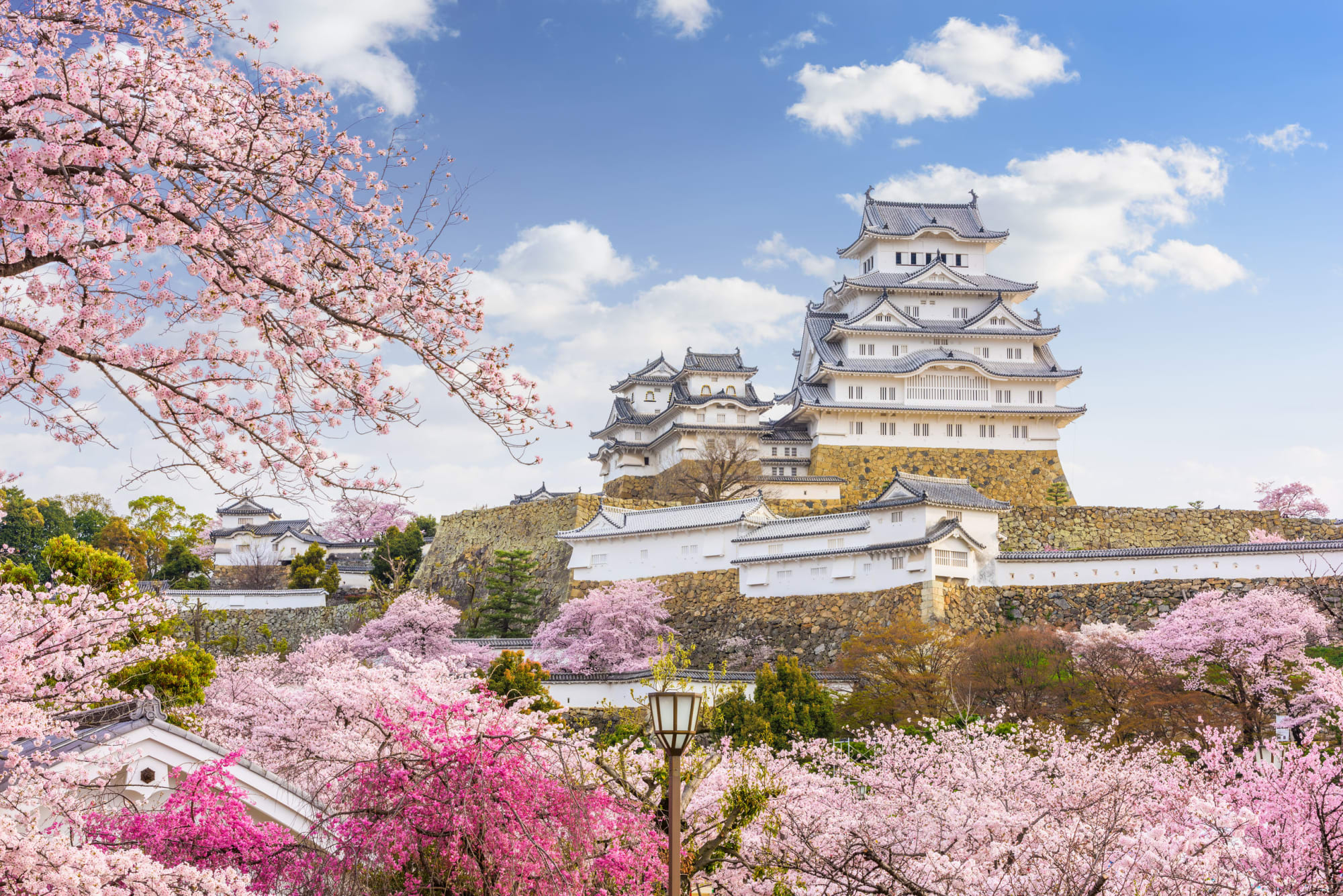
- Himeji Castle. One of the twelve castles in Japan that have kept their original keep. Never burned, never rebuilt.
- The Honda brewery. Brewing since 1921, and the house opens its own workshop.
- Tatsuno. Light soy sauce was invented here in 1666; the town has kept its timber warehouses.
- Hands in the material. Filtering your own soy sauce, shaping miso-tama, and seeing up close the kōji it all comes from.
- The tiles of Harima. They still cover the roofs of the country’s temples and castles.
- The Japanese Toy Museum. 90,000 toys from 160 countries, across six white-walled storehouses.
Itinerary
Day 1 — Rice first, then soy
The morning starts at the Honda brewery, brewing here since 1921. The rice is yamada nishiki, the most sought-after of the sake rices, which the house has contract-grown on one of the country’s top-graded plots. The owner, or someone from the house, takes you from one station to the next: polishing, fermentation, maturing. The tasting comes at the end, standing between the vats, and nothing is hurried.
Then thirty minutes by road to Tatsuno. Light soy sauce was born here: usukuchi salts without colouring, and the clear broths of Kansai owe it their look. The town has kept its lanes and its merchants’ frontages. The afternoon sits in two workshops, Mukashi Mirai and Kura Terrace: you filter your own soy sauce, roll onigiri, shape miso-tama — the miso balls you only have to stir into hot water. A nearby maker shows kōji up close: few Japanese people get the chance.
The historic quarter closes the day, with the inside of a machiya, narrow at the front and long at the back. In the evening, back to Himeji: dinner takes up the produce of the region and the morning’s sake.
Day 2 — Fired clay, then the White Heron
Off to Koyoseiga, a family firm that makes the tiles for the country’s temples, shrines and castles. After a demonstration, the craftsmen put you to work. The clay is cool and soft under the fingers, and you leave looking at Japanese roofs differently.
The Japanese Toy Museum takes the end of the morning. Five thousand pieces are on show at a time, out of ninety thousand held: old dolls, games from the Edo period, clockwork mechanisms. Behind the inventory, a social history of Japan is told through what was given to children.
The afternoon goes to the castle, known as the White Heron for the colour of its plaster, its keep standing since 1609. The visit follows the defensive system — the gates one after another, the corridors that force you to turn, the square, round and triangular loopholes — then the timber stairs to the top floor, where the town and the Harima plain open out.
From there, twenty minutes on foot down the Otemae-dōri to the station, on the Sanyō line: Okayama to the west, Kobe and Kansai to the east.
Our addresses
The night is spent in Himeji, a few minutes’ walk from the station — and so from the castle, the restaurants in the centre and the road to Tatsuno. Our reference address is the Hotel Monterey Himeji: modern rooms, attentive service, and the upper floors look onto the castle or the town. We chose it for that balance of position, comfort and service, and because it makes the rest of the journey simple, towards Hiroshima or towards Kansai.
Himeji burned on 3 July 1945 — two thirds of the town. The castle came through. That explains the rest: the town around it is post-war, and you will not find old inns there. If the night matters as much as the days, a ryokan at Arima or Kinosaki can be added before or after.
Travel times
Himeji sits on the Sanyō line, between Okayama and Kobe. The shinkansen sets it between Kansai and western Japan without a detour.
| Journey | Time |
|---|---|
| Shin-Osaka → Himeji, shinkansen | 30 min |
| Osaka (Umeda) → Himeji, rapid train | 1h |
| Kyoto → Himeji, shinkansen | 45 min |
| Shin-Kobe → Himeji, shinkansen | 15 min |
| Hiroshima → Himeji, Hikari or Sakura shinkansen | 1h |
| Honda brewery → Tatsuno, by car | 30 min |
| Himeji station → the castle, on foot down the Otemae-dōri | 20 min |
One point to watch: the Nozomi and the Mizuho, the fastest trains, do not stop at Himeji. You need a Hikari or a Sakura, and they run less often — the train is booked ahead. Before or after, the side trip combines with Hiroshima & Miyajima (1h), with Tomonoura and with Naoshima, all on the same line.
Good to know
- Several of the workshops are family-run and take few people at a time: places are limited and are booked well ahead. On some days the vat you came to see is simply resting.
- The workshops are done with your hands in the material: simple clothes are enough.
- The keep is climbed on foot, by the original stairs — six floors, no lift — and you go in with your shoes off. Shoes that come off easily make the climb easier.
- The castle opens at 9am. Last entry at 4pm, 5pm from 27 April to 31 August. In the first week of April, when the cherry trees of the Sannomaru are in flower, access to the keep is managed by timed tickets handed out at the entrance.